Showing posts with label media. Show all posts

Wednesday, 30 January 2008

Foundphotos

Everybody gather round and share in the delights of Foundphotos - a collection of accidentally brilliant images.

The photos are collected (or stolen as far as I can make out) from all over the world.

Users of file sharing websites for downloading music, often make their photo albums publicly available, along with their collection of rare Britney b-sides.

This seems to be an unintentional oversight by the users but the guy who runs Foundphotos has exploited people's carelessness to raid their albums for photographic gems.

All for a good cause though as the results are hypnotisingly good.

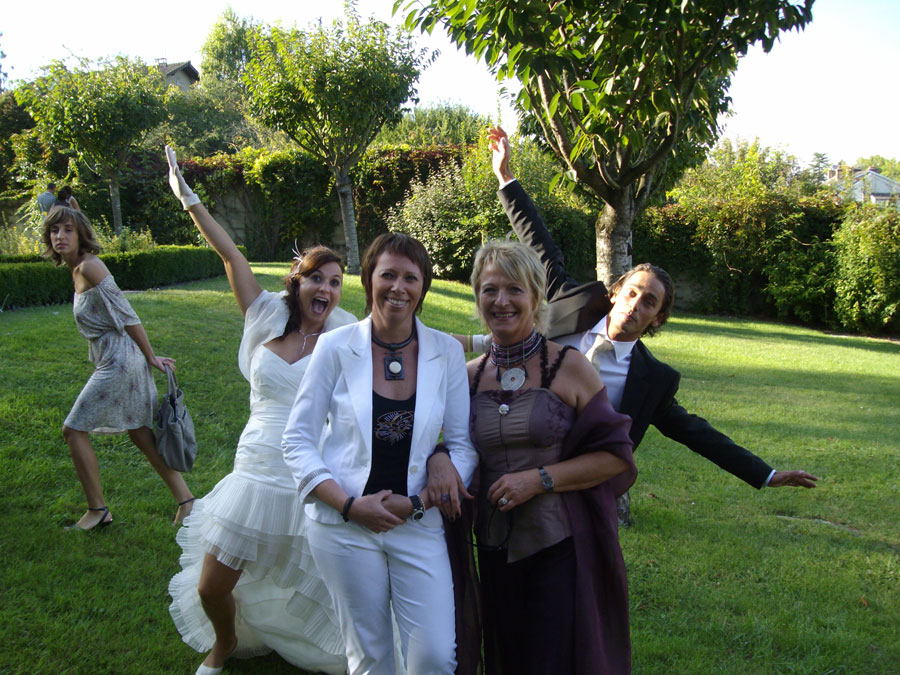
I have lost many an hour scrolling through this collection of pictures that bear comparison to a family photo album.


Not like your family or my family but like some kind of experimental family - a failed experiment of a family, full of freaks.

What I'm getting at is that some of the pictures are the kind of mundane thing you'd expect to see in an unimaginative, family photo album.

Somehow, the guy that compiled the website manages to see beauty or character or something fascinating in images that would otherwise be uninspiring if you were rifling through the collection that they were originally taken from.

This is why I think they are accidentally brilliant.

Rather than listen to me prattling on about it, why don't you just go and check out Foundphotos.

Thursday, 24 January 2008

Press conferences

This week, my work placement at GP newspaper has given me a great insight into how the big media cogs turn as they churn out the news.

On Tuesday, I visited NICE offices in Holborn for a press conference.

That sentence is a little misleading because although the offices were indeed very nice, it is actually an acronym for the National Institute for Clinical Excellence (or the National institute for Curbing Expenditure as a cynical doctor once told me).

As GP goes to press on Tuesdays, I was sent out as the lone reporter to cover the story *gulp*.

Among the journos gathered were reporters from The Times, The Guardian, two from the BBC and er, one from The Daily Express.

When we were given the opportunity to ask questions, David Rose from The Times put his hand up quicker than me and said what I was going to say.

I felt like the nerdy kid trying to impress teacher and getting all bitter because someone else got in there first - particularly as they kept saying what a good question it was.

Cut throat stuff.

The next day I went to the Department of Health for a big announcement on tackling obesity.

(Tackling obesity - much easier than tackling skinny)

All the same faces from the previous day's press conference were there and it made me feel part of a community - albeit, one a bit like facebook where you have a passing recognition of the people there, can publicly see what they've written and avoid communicating with them in real life.

Two cabinet ministers, Alan Johnson and Ed Balls conducted the briefing.

According to my colleague from GP, it was quite a boring one as far as these things go.

In terms of seeing how the media operates though, there were a number of things I found interesting.


Firstly, the press are cynical bastards and rightly so.

An amusing situation arises whereby the media and the politicians take up these polar opposite roles.

Media-trained politicians try to answer questions with a breezy charm while the po-faced hacks get all angry cutting through the bullshit eminating from our country's leaders.

I think I'm still at the naive stage where I think the people at the front are actually trying to make a difference.


Secondly, cabinet members have some pretty impressive staff buzzing around them.

As soon as somebody asks a difficult question the guys at the front fob off the journalist with meaningless dirge, while the staff at the back start scurrying around looking for the answer.

Within a minute, somebody's hand goes up and you get a "would you like me to field that one minister?"

I want people like that for my exams.


Lastly, it's quite odd seeing what major point the papers pick out from the press conference and decide is the news.

Today's papers mostly said stuff like "fatties are to get paid to lose weight".

Alan Johnson said in the press conference that cash incentives for weight loss are a tiny part of a huge strategy on obesity but that's what the papers ran with.


Politicians and journalists both have their own agendas.

This makes it very difficult to understand the truth behind stuff being pumped out of the big, weird news machine.
Thursday, 10 January 2008

War, what is it good for? Jobs in journalism.

This week, my colleagues and I, studying journalism at Westminster University, have been up to our nipples in exam stress.

The tidemark of stress didn’t quite reach our necks and if I’m honest, only reached my nipples if I ducked down a bit.

Reporting week, as it is known, consists of only one exam in the traditional sense, which was on media law.


We spent the rest of the week turning over reports from surveys, speeches and press releases in a very short space of time.

The culminating event in all this occurred today and it involved a man from NATO fielding our questions about the deployment of peacekeeping troops to the conflict zone in Northland.

You may not have heard about the conflict in Northland and the current problems enforcing the arms embargo on the Jumblez insurgents but don’t worry, that’s because it’s all made up.

Confused?

Each year, NATO runs exercises to train its personnel.

The exercises use hypothetical scenarios, occurring in fictitious, invented war zones.

These are big training operations, using around 30 vessels, some of which are huge warships, with helicopters buzzing around and everybody getting very excited indeed.

It sounds like the kind of thing that an 11 year old billionaire would organise.

Anyway, to make the situation more like a real war zone, they take 5 or 6 student journalists with them to report on events.

Today’s exam was our chance to impress the guy that decides which students will go on the exercises - Lt Cmdr Rupert Nichol.

He answered our questions in a role play about the deployment of NATO troops in a prelude to the training exercise, which will run in June.

One former student, Tamer Al Mishal, who got involved in the NATO training, went straight into the job of Gaza correspondent for the BBC after he left Westminster.

So, reporting week is now over and we go out on work placements on Monday to do some real journalism, by which I mean, making coffee.

This blog can also be seen at www.thewordfromwestminster.blogspot.com